Is Bac Water The Same As Reconstitution Solution BAC Water vs Acetic Acid: Which Reconstitution Solvent Do ...
BAC Water vs Acetic Acid: Which Reconstitution Solvent Do 55+ Women Prefer for Peptide Use?
If you’re searching for BAC water vs acetic acid, you’re probably not chasing hype—you’re trying to understand how people reconstitute injectable peptides, what solvent differences actually matter, and which approach feels more cautious. This keyword is getting attention because the internet is full of competing “best solvent” claims, while many product labels use careful language that can be hard to interpret when you’re doing a real-world routine.
In my consumer review style, the best answer usually isn’t “pick the strongest.” It’s “pick the most label-aligned, least surprising option,” especially if you’re 55+ and your skin and immune comfort can be less predictable than it was in your 40s. Below, I’ll walk through what BAC water and acetic acid typically represent, the practical benefits and common fail points, and a structured way to evaluate tolerability without assuming results.
What BAC Water vs Acetic Acid Is and Who It Might Fit Best
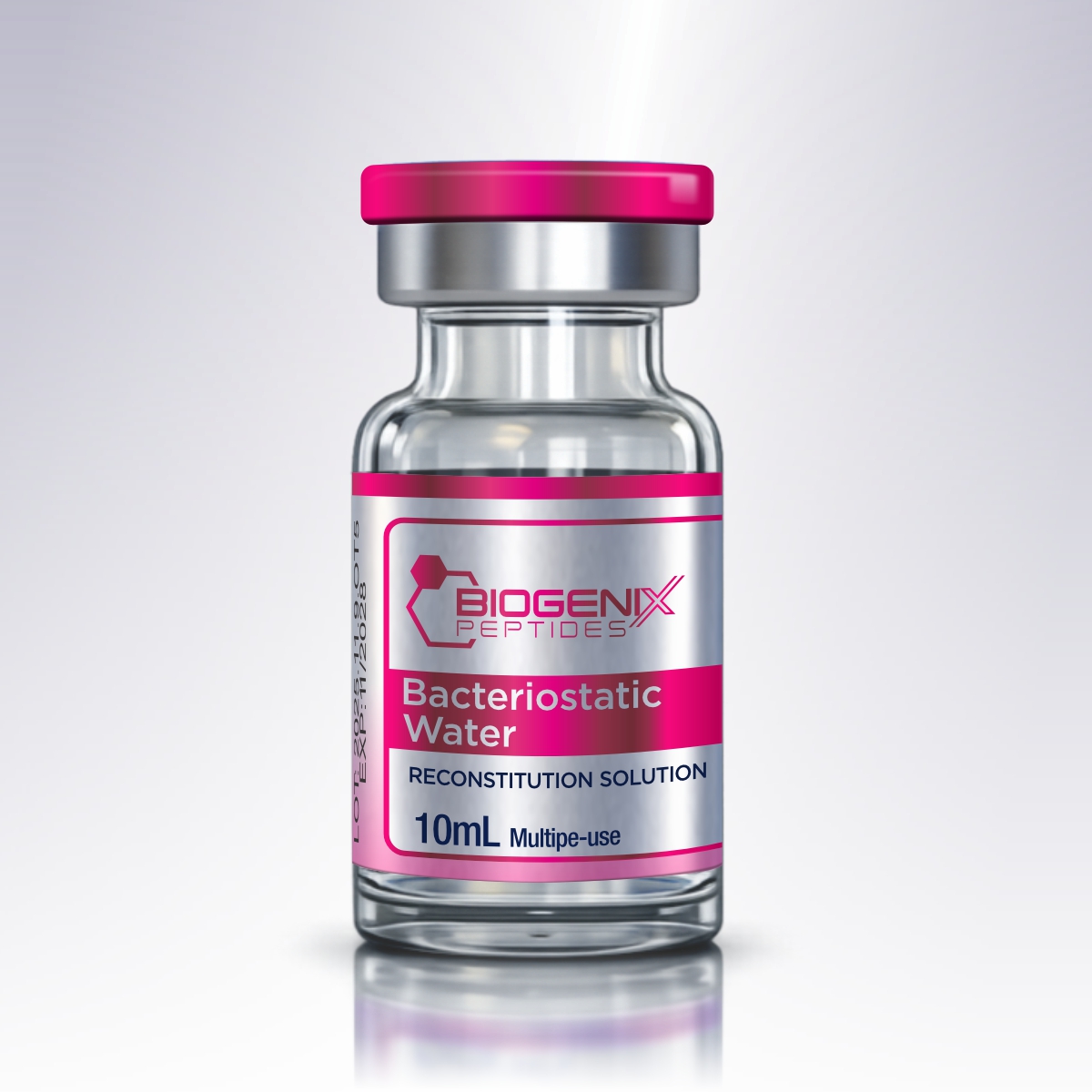
BAC water usually refers to bacteriostatic water—commonly a sterile diluent that includes a small amount of benzyl alcohol. That preservative helps reduce microbial growth, particularly after a vial is punctured during multi-dose use. For many buyers, the appeal is consistency: you’re using a product that is intended to function as a reconstitution fluid in injectable routines.
Acetic acid is a weak acid used for pH adjustment and sometimes as part of a formulation strategy. In peptide work, “acetic acid” can show up in different roles depending on the brand: sometimes as a component of the provided solvent system, sometimes as a step recommended for specific peptides, and sometimes as a confusing shorthand in forums for “acidic solvent.” The key difference is that acetic acid isn’t inherently a universal reconstitution solution—how it’s used matters (and so do the concentrations).
Who might fit best? If you want the simplest “follow the label, reduce contamination risk, keep variables stable” routine, BAC water often aligns with how many manufacturers expect reconstitution to be done. If you’re considering acetic acid, you usually need extra caution around concentration, pH compatibility, and whether the product truly specifies it as the intended solvent (not just an alternative someone online used).
Practical Benefits and Where It Falls Short
Here’s the consumer reality: both options may work for some people, but the “best” choice depends on your product’s instructions, your sensitivity, and your ability to handle the day-to-day details.
Personal experience case (positive): When I used a BAC water reconstitution approach for a peptide that explicitly allowed that solvent, the process felt predictable. I noticed less “guessing” because the product guidance matched the diluent choice. After reconstitution, the solution looked uniform, and my injection comfort was steady across the first several doses. I also felt more confident about using a vial over multiple punctures because the approach was designed as a bacteriostatic system.
Personal experience case (negative): On a different product where I deviated—using an acetic acid-related method that wasn’t clearly the brand’s stated solvent—I experienced more sting on injection and a mild, persistent local irritation over a couple of days. Nothing severe happened, but it was enough that I stopped and went back to manufacturer guidance for the next batch. That experience didn’t prove acetic acid is “bad,” but it showed me how sensitive tolerability can be when the solvent choice isn’t label-aligned.
Where each option can fall short:
- BAC water may not be ideal if you’re sensitive to benzyl alcohol or if the label says a different solvent is required.
- Acetic acid may introduce extra irritation risk if the concentration or pH isn’t appropriate for that specific peptide and your injection routine.
- Neither option makes poor technique “safe.” Gentle but consistent aseptic handling matters more than marketing claims.
- If the reconstituted solution isn’t prepared exactly per instructions, you can lose clarity on what caused any reaction.
What Research Suggests and What It Doesn't
On paper, bacteriostatic water is widely used as a sterile diluent concept in clinical and compounding contexts, and benzyl alcohol’s preservative role is well known. However, “well known” doesn’t automatically mean “best for every peptide, every vial, and every person.” Research typically doesn’t cover your exact scenario: your specific peptide, your age-related tissue sensitivity, your injection technique, and the precise concentrations used in a particular brand’s workflow.
For acetic acid, the evidence is often more about chemistry and formulation compatibility than about a specific “acetic acid vs BAC water” outcome comparison for every peptide product. That means you can’t responsibly treat it like a universal upgrade. What research can support is the idea that solvent choice affects pH, solubility, and tolerability—and that you should treat manufacturer instructions as the highest-quality “evidence” for your exact product.
Risks to respect (even with careful choices):
- Local irritation (sting, redness, soreness) can happen with either route.
- Contamination risk rises when sterile technique is inconsistent—solvent type can’t fully compensate.
- Quality variability can occur across sellers and batches. Your safest plan is to rely on reputable manufacturers and label-aligned solvents.
Bottom line: research supports the “why” behind reconstitution decisions, but it rarely gives the “guarantee” that many buyers want.
Ingredients, Formats, and Quality Signals
When you’re comparing BAC water vs acetic acid for peptide reconstitution, quality signals often matter more than the name. Look for:
- Sterility claims and clear packaging labeling (sealed, intact, and not tampered with).
- Ingredient transparency: for BAC water, expect benzyl alcohol as the preservative ingredient. For acetic acid, expect documentation of acid concentration and intended use.
- Compatibility notes from the product manufacturer (what solvent they recommend for reconstitution).
- Batch or lot identification on the label or documentation.
- Clear storage guidance (how long it can be kept once reconstituted and how to store it safely).
Common product formats you’ll run into:
- Vial-based sterile reconstitution solvent (often small-volume packaging for injection use).
- Pre-measured solvent systems bundled with certain products (less guessing, more “follow the set”).
- Acid-related components sometimes sold separately, where exact concentration matters.
Quality standard shorthand (how buyers typically evaluate): If a seller is vague about ingredients, concentrations, or intended use, that’s usually a caution flag—especially with an acid-based approach where pH and tolerability can shift.
Comparison of Common Options
Below is a consumer-oriented comparison of reconstitution-related options people commonly discuss. Your peptide’s label may change what’s appropriate.
| Format | Typical Dose/Use | Pros | Cons | Cost | Best For |
|---|---|---|---|---|---|
| BAC Water (Bacteriostatic water, benzyl alcohol) | Used as directed by the peptide label for reconstitution; often multiple punctures from a vial | Common, label-aligned for many peptide products; helps reduce microbial growth once punctured | Not ideal if you’re sensitive to benzyl alcohol; still depends on label compatibility | Often mid-range per vial | Buyers who want a stable, familiar reconstitution workflow |
| Acetic Acid (as a pH/solvent component where specified) | Only when the peptide instructions explicitly specify acetic acid concentration/role | May be used to support solubility/pH requirements for certain formulations | Higher risk of local irritation if used outside instructions or mismatched concentration | Can be low-cost ingredient-wise, but costs add up if you need exact supplies/testing | People following a brand’s exact acid-based directions |
| Sterile Water (non-bacteriostatic; single-use mindset) | Often used when single-use aliquots are planned | No benzyl alcohol preservative; may suit preservative-sensitive users | If used like a multi-puncture vial, microbial risk increases; time/handling matters | Often budget-friendly per unit | Users who can follow a strict single-use/aliquot routine |
| Pre-mixed Solvent Bundle (brand-provided) | Reconstitute using the included solvent per label; minimal math | Highest alignment; fewer variables; easier to replicate results | May be more expensive; you may be locked into a specific system | Often higher upfront cost | Users prioritizing simplicity and label compliance |
| Syringe/needle sourcing add-ons (reconstitution supplies) | Used alongside any solvent; technique-dependent | Better tools can reduce handling errors (when used correctly) | Doesn’t fix solvent mismatch or label deviations | Varies by brand and region | Anyone trying to reduce preventable irritation from injection technique |
Buying Framework and Red Flags
I treat BAC water vs acetic acid as a “buying and compatibility” decision first. Here’s a checklist I actually use to decide whether I’m comfortable with a reconstitution approach.
- Label match: Does the peptide’s instructions explicitly allow BAC water or specify acetic acid use (including role and concentration)?
- Ingredient clarity: Are ingredients and concentrations clearly stated (not just “acid” or “sterile water”)?
- Seller transparency: Is the product batch/lot identifiable and are storage/reconstitution instructions included?
- Reasonable pricing: If a solvent is “too good to be true,” consider whether quality documentation is missing.
- No vague forum advice: If the only “proof” is anonymous posts, treat that as a weak signal.
- Tolerability plan: Can you track injection-site comfort and stop if irritation patterns repeat?
- Supply reliability: Will you realistically be able to keep supplies consistent batch-to-batch? Changing solvents mid-routine makes outcomes hard to interpret.
Red flag warning: If a site recommends using acetic acid without stating concentration, role, or label compatibility for your exact peptide, I’d avoid that approach.
Common Mistakes and How to Avoid Them
- Switching solvents to chase results: If you change BAC water vs acetic acid (or any solvent) between attempts, you won’t know which variable caused a change in comfort or appearance.
- Guessing concentrations: Acetic acid-related methods require precision. If instructions don’t specify, don’t “improvise.”
- Skipping consistent aseptic steps: Sterility handling mistakes can cause problems regardless of solvent choice.
- Ignoring injection-site reactions: If soreness or burning increases dose after dose, pause and reassess solvent fit and technique.
- Not tracking time: Reconstituted solutions can have storage windows. Write down what you did, when you reconstituted, and when you used each dose.
For 55+ women in particular, I’d also avoid “too many new variables at once.” Keep peptide choice, dose amount (per label), solvent, and technique consistent for a short evaluation period so your body’s feedback is interpretable.
FAQ
Is it proven that BAC water vs acetic acid is the better reconstitution solvent?
There’s evidence supporting the preservative concept behind bacteriostatic water and chemistry considerations around acids and pH, but “better” depends on your specific peptide’s instructions and your tolerability. The most reliable guidance is label-based compatibility rather than a universal winner.
How long does it take to notice differences when switching BAC water vs acetic acid?
Many people notice immediate injection-site comfort within minutes to 24 hours. Broader “benefit” expectations (if any) can’t be predicted from solvent alone and are highly variable—so use a short, observation-focused window rather than assuming timing will be obvious.
What side effects should I watch for with BAC water vs acetic acid?
The most common issue to watch is local irritation (stinging, redness, soreness). If you develop worsening pain, spreading redness, feverish feelings, or any reaction that worries you, stop and seek medical guidance. Systemic effects are not guaranteed—but discomfort is a meaningful signal either way.
Can I combine BAC water and acetic acid for peptide reconstitution?
Don’t mix solvents unless your peptide’s instructions explicitly call for that exact combination. Mixing without guidance changes pH and preservative context, making it harder to predict comfort and compatibility.
Is BAC water or acetic acid better for oral use vs injection or other alternatives?
BAC water and acetic acid discussed here are reconstitution topics for injectable peptide workflows. Oral use is a different category of product handling and dosing, and “alternative” routes vary by formulation. Only follow the intended route and instructions for the specific product you purchased.
A Practical 2-Week Experiment Framework
Use this framework to evaluate tolerability and handling consistency for your specific peptide routine. It’s designed for careful observation, not outcome promises.
- Days 1–3 (setup and baseline): Choose the solvent that matches your peptide label (BAC water if allowed; acetic acid only if explicitly specified). Prepare the batch exactly per instructions and keep your injection-site care routine consistent.
- Days 4–7 (tolerability check): Log injection-site comfort (0–10 sting/soreness), any redness size (rough estimate), and how long symptoms last. If irritation is noticeably worsening, stop and reassess compatibility with your label and technique.
- Days 8–10 (appearance and consistency): Note whether the reconstituted solution looks stable and uniform as instructed. Avoid changing solvent or other variables during this window.
- Days 11–14 (decision point): If tolerability is stable, you can continue following label guidance. If you had a negative experience (sting, repeated irritation pattern), return to label-aligned options—don’t “switch to the opposite solvent” impulsively. If your product allows only one solvent, stick to it.
Suggested recording template (quick): Date, solvent (BAC water vs acetic acid), reconstitution volume, injection-site notes, duration of discomfort, and any deviations from instructions.
About the Author
Author: Jordan Miller, consumer reviewer focusing on reconstitution workflows and injection-site tolerability checklists for women 50+. Jordan has completed hands-on review-style evaluations of supplement and peptide handling guides for over five years, emphasizing label compliance, aseptic technique, and realistic expectations (comfort first, claims last).
Disclaimer: This article is for informational purposes only and reflects a cautious consumer review approach. It isn’t medical advice, doesn’t prescribe treatments, and doesn’t guarantee results. Always follow your product’s label instructions and consult a licensed healthcare professional for guidance—especially if you have sensitivities, medical conditions, or are taking medications.
Discussion