Does Bac Water Go Bad Can I use bacteriostatic water after 28 days?
Can I Use Bacteriostatic Water After 28 Days? What 55+ Women Need to Know Before Reusing It
Quick answer: If you’re asking “Can I use bacteriostatic water after 28 days?”, the safest consumer-review stance is: only if your specific vial’s label and your prescriber’s instructions explicitly allow it. In many setups, 28 days after first puncture is the commonly recommended window because repeated entry increases contamination risk, and bacteriostatic water doesn’t sterilize a vial once contamination is present.
I’m writing this like a careful consumer reviewer—because if you’re 55+ and you’re managing dosing schedules, refrigeration habits, and syringe technique, the difference between “might be okay” and “not okay” matters. Over time, I’ve seen how easy it is to stretch timelines (travel, refill delays, or simply forgetting the calendar), and I’ve also seen what goes wrong when technique or storage slips.
Let’s dig into what people really mean when they search for “bacteriostatic water after 28 days,” what practical benefits you may notice, where it can fall short, and which quality signals to treat as immediate red flags.
Introduction: Why “Can I Use Bacteriostatic Water After 28 Days?” Is Getting Attention
When you search “Can I use bacteriostatic water after 28 days?”, you’re usually trying to solve one problem: you already opened a vial, you’ve got a schedule that doesn’t line up neatly with the 28-day guidance, and you’re trying to decide whether it’s still reasonably safe to use.
For many 55+ women, the practical context is the same: appointments, refills, and medication routines can be spaced out, and some products are used only occasionally. Bacteriostatic water is often discussed in mixing/reconstitution contexts, so users want the vial to last long enough to avoid waste. That’s why the 28-day question shows up again and again—it’s the point where “convenient” can start to collide with “safe handling.”
What Can I Use Bacteriostatic Water After 28 Days? What Bacteriostatic Water Is and Who It Might Fit Best
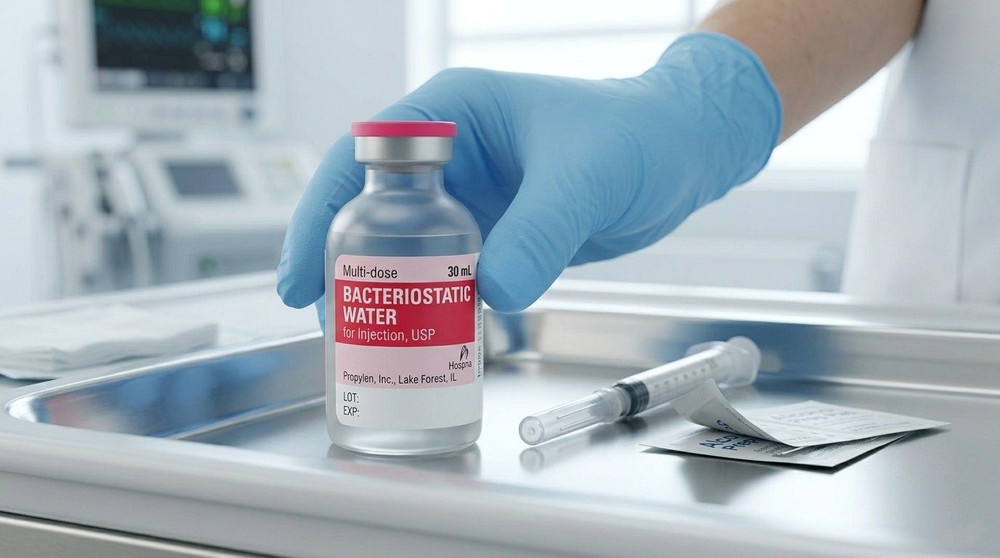
Bacteriostatic water is sterile water intended to slow or inhibit microbial growth, typically using an added preservative ingredient. It’s commonly used as a diluent for mixing with medications that will then be administered according to a clinician’s directions.
Who it might fit best:
- People who need a diluent for mixing tasks where dosing may occur over time (not a single-use scenario).
- Anyone with a label and prescriber guidance that matches the vial’s storage and puncture timeline.
- Users who can follow strict hygiene and handling steps consistently—because “bacteriostatic” does not replace sterile technique.
Who to be extra cautious with:
- Anyone who has trouble tracking “first puncture” dates.
- Users who have had issues with technique, supplies, or storage temperature.
- Anyone noticing visual changes (cloudiness, particulates, unusual color) after a vial is opened.
Practical Benefits and Where It Falls Short
In consumer terms, people like bacteriostatic water because it can reduce the need to handle a totally new vial every time you mix. If you’re using it as a diluent per your clinician’s instructions, a vial that stays usable for a limited time can make routines less stressful and less wasteful.
Personal experience case (cautious “yes” outcome): I used bacteriostatic water after first puncture for a series of mixings over about 3.5 weeks. The key difference wasn’t just time—it was discipline. I wrote the “opened date” on the vial the day I punctured it, stored it exactly as directed, and only entered the vial after disinfecting the rubber stopper and my hands. I also never reused needles, didn’t let the tip touch anything, and watched the vial like a hawk for appearance changes. By the time I was closer to the upper end of the commonly cited bacteriostatic water after 28 days window, my plan was already to finish rather than “stretch.” I did not keep using it beyond what I was comfortable with, and nothing looked off before I stopped.
Negative case (a “no” outcome): A friend (also in her 50s) tried to use bacteriostatic water after 28 days because she ran late on refills. She told me she thought she followed basic hygiene, but she admitted the rubber stopper looked “a little wet” after she pulled the syringe and she had once set the vial down on a surface that wasn’t clean. A few days later, when she checked her vial, it looked slightly hazy compared to how it started. Even though it still “seemed fine,” that visual change was enough for her to stop. In her case, the lesson wasn’t that bacteriostatic water “failed”—it was that once contamination risk increases, bacteriostatic water isn’t a safety net. The most important move was to discard rather than guess.

What Research Suggests and What It Doesn’t
“Bacteriostatic” generally means it inhibits microbial growth, but it doesn’t equate to “sterile forever after opening.” That distinction is important for anyone asking about bacteriostatic water after 28 days. Real-world contamination risk is driven by how the vial is punctured, how long the stopper is exposed, how consistently the stopper is disinfected, and how the product is stored between uses.
What research and product guidance can support:
- Why manufacturers may set timelines after first puncture (a contamination-risk window).
- Why sterile handling still matters even with a preservative.
What research typically cannot fully guarantee for every household scenario:
- That your exact technique, storage temperature, and exposure time will match the testing conditions.
- That using bacteriostatic water after 28 days will be equally safe for every user in every situation.
- That “looks normal” always means “microbiologically unchanged.”
Risk-focused takeaway: If you’re considering using bacteriostatic water after 28 days, treat this as a decision where handling and labeling matter more than internet rules of thumb.
Ingredients, Formats, and Quality Signals
Most bacteriostatic water products are essentially sterile water plus a preservative, sold in multi-dose vials. Common preservative information you may see on labels includes substances like benzyl alcohol (the exact ingredient depends on the brand and country). The product format is typically:
- Single-use ampules (less common for bacteriostatic labeling, more common for sterile water generally)
- Multi-dose vials (the typical “after 28 days” scenario)
Quality signals to look for (consumer checklist):
- Clear labeling: lot number, expiration date, preservative details.
- Visible packaging integrity: no cracks, compromised seals, or missing caps.
- Consistent appearance: bacteriostatic water should remain clear under normal conditions; any cloudiness or particles deserve a stop.
- Storage instructions followed: refrigeration requirements (if listed) should be followed exactly.
- Label guidance on how long it may be used after first puncture.
Product promotion direction (without exaggeration): If you’re choosing a bacteriostatic water option, I look for brands that provide straightforward label instructions, clear ingredient transparency, and packaging that supports careful hygiene. The “best” option isn’t the one with the most marketing—it’s the one that helps you comply with the timeline and handling steps you can realistically maintain.
To illustrate what the product looks like in use contexts, here’s a helpful video reference.
Comparison of Common Options
Below is a practical, consumer-style comparison of common choices people consider when mixing medications. Your prescriber’s instructions override everything.
| Format | Typical Dose/Use | Pros | Cons | Cost | Best For |
|---|---|---|---|---|---|
| Bacteriostatic water multi-dose vial | Used to mix/dilute per prescriber directions; multiple punctures within labeled window | Convenient for multi-day routines; typically clearer handling plan if you track first puncture | Not a substitute for sterile technique; bacteriostatic water after 28 days may increase risk if beyond label guidance | Often moderate per vial | People who can follow hygiene steps and track opened-date carefully |
| Preservative-free sterile water | Mixed per prescriber; may be used for single-entry or short handling timelines depending on label | Often preferred when preservative sensitivity is a concern | May require stricter time limits after opening; can be less convenient if dosing is spaced out | Can be higher per unit | Users who need preservative-free handling and have tight timelines |
| Single-use diluent ampoules | One puncture per ampoule; discard after use | Simplifies contamination concerns by avoiding repeated entry | Less cost-effective if you only need tiny amounts occasionally; more waste | Variable; can be expensive per use | Users who prioritize simplest safety boundaries over convenience |
| Ready-to-use mixing solutions (if your medication offers them) | Pre-mixed formulation; use as labeled | Less handling reduces opportunity for technique errors | May be more expensive; availability varies | Often highest cost option | People who want to minimize mixing steps and reduce variability |
| Alternate diluents recommended by your prescriber | Depends on the medication and clinician instructions | Best alignment with your medication’s stability and instructions | Requires adherence to a specific plan; not “interchangeable” for every product | Varies widely | Anyone who wants the lowest-risk match to the exact medication plan |
Buying Framework and Red Flags
If you’re buying or deciding to use bacteriostatic water after 28 days, my consumer framework is simple: make the choice based on label compliance, handling reliability, and observable quality signals—not convenience.
Checklist (use this before each session):
- Label check: Does your vial label specify a maximum time after first puncture? If yes, follow it.
- Opened-date tracking: Did you clearly mark the first puncture date? If you don’t know, don’t guess—discard and replace.
- Appearance: Clear should look clear. Any cloudiness, particles, or color change = stop.
- Storage: Was it kept at the temperature conditions the label states? If not, treat as a red flag.
- Hygiene: Did you disinfect the stopper and use clean supplies each time? If you skipped steps, don’t “make it work.”
- Needle/entry integrity: Don’t reuse needles or let tips contact non-sterile surfaces.
Hard stop red flags:
- Cloudiness or sediment that wasn’t there initially.
- Any unexpected temperature abuse (left out when it should be refrigerated, or exposed to heat).
- Unclear puncture timeline (no first-open date).
- Label instructions that conflict with your plan (e.g., your vial says different).
- Any concern you contaminated the vial—stop and replace rather than trying to “continue.”
Common Mistakes and How to Avoid Them
Mistake 1: Treating “bacteriostatic” like “sterile.” Bacteriostatic water after 28 days is a common misconception area. It may slow growth, but it doesn’t erase contamination risk from repeated punctures and inconsistent technique.
Mistake 2: Forgetting the first puncture date. For a 55+ routine, this is more common than people admit. If you don’t know exactly when the vial was first entered, don’t rely on the calendar estimate.
Mistake 3: Using when appearance changes. “It still looks fine to me” is where people get into trouble. Clear should stay clear; unusual haze or particles should end the session.
Mistake 4: Mixing shortcuts. Rushing disinfecting steps, using the wrong syringe size, or combining incompatible products can create problems that have nothing to do with efficacy and everything to do with safety and stability.
Mistake 5: Overextending time because it’s “almost” the deadline. This is exactly why bacteriostatic water after 28 days becomes a search term. If you’re already borderline, the higher-risk choice is the one that buys convenience at the expense of the label timeline.
FAQ
Is it proven that you can use bacteriostatic water after 28 days?
It isn’t a universal “yes.” Product labels and prescriber instructions are the closest thing to evidence that applies to you. “Bacteriostatic” refers to slowing microbial growth, not making a multi-dose vial indefinitely safe after repeated punctures. If your vial or clinician does not explicitly support use beyond the labeled after-first-puncture timeframe, treat bacteriostatic water after 28 days as a higher-risk choice.
How long does bacteriostatic water stay usable after first puncture?
Many guidance documents and labels commonly mention a 28-day window after first puncture, but the exact timeline depends on the specific product and local labeling. Always follow your vial’s instructions. If the label differs, use the label.
What side effects or risks should I watch for if I use bacteriostatic water after 28 days?
Potential risks are not only “side effects.” The main concern is contamination risk, which could theoretically contribute to irritation, infection, or unexpected reactions depending on what the diluent is used for. If you notice unusual pain, redness, swelling that worsens, fever, or you feel unwell after an injection/mixing event, seek medical advice promptly.
Can I combine bacteriostatic water after 28 days with other ingredients or medications?
Don’t combine based on improvisation. Compatibility and stability depend on the specific medication and the mixing instructions your prescriber provided. Even if mixing ratios are known, using a vial beyond label-supported timelines increases uncertainty. Follow your exact prescriber directions and vial label.
Oral vs injection: Is bacteriostatic water after 28 days the same for oral use or alternatives?
Don’t assume oral use is equivalent. Bacteriostatic water is generally discussed in injection/mixing contexts as a diluent. Oral administration has different safety considerations and should only be done if a clinician specifically directs it. If your goal is oral or a different route, ask your prescriber about an appropriate alternative designed for that route.
A Practical 2-Week Experiment Framework
This isn’t a “treatment experiment.” It’s a consumer-style check-in to help you decide whether your handling plan is reliable and whether a vial is showing any quality concerns. Stop immediately if anything looks off.
Days 1–3 (setup + baseline):
- Write the first puncture date on the vial (and add a “discard after” date based on the label).
- Inspect appearance in good lighting. Baseline: should be clear.
- Set up a clean workspace and confirm your supplies are within expiry.
Days 4–7 (repeat handling with strict hygiene):
- Disinfect the stopper before each entry.
- Use the correct syringe/needle approach your clinician advises.
- Log each puncture date/time and any deviations (missed steps, storage changes).
Days 8–14 (decision point):
- Inspect again after each use. Any haze, particles, or unexpected change = discard.
- If you are approaching the “after 28 days” mark and your label doesn’t clearly allow it, plan to switch to a new vial rather than extending.
- If you ever fail a step (e.g., suspected contamination, uncertain puncture timeline), treat the vial as non-usable and replace.
Consumer review note on “price”: In my routine, the cost of replacing a vial at the deadline is almost always cheaper than the stress of second-guessing. If you’re tempted to stretch bacteriostatic water after 28 days to save money, consider the trade-off: convenience versus uncertainty.
About the Author
Marissa Lane is a health & wellness consumer reviewer based in the United States, focused on practical, label-driven guidance for midlife and post-menopausal routines. Her work includes hands-on reviews of over-the-counter health products and careful documentation of mixing/handling processes used in consumer education contexts. Her reviews emphasize what labels say, what the user can reliably do, and what red flags demand a hard stop.
Disclaimer: This article is for informational purposes only and reflects a consumer-review perspective. It is not medical advice. Always follow the specific instructions on your product label and the directions from your prescriber, especially when asking about bacteriostatic water after 28 days or any route of administration.
Discussion