Bpc 157 Where Does It Come From Multifunctionality and Possible Medical Application of the BPC 157 Peptide—Literature and Patent Review
In my hands-on work reviewing preclinical compounds and their translational claims, one question comes up repeatedly: bpc 157 where does it come from—and what does that origin imply for the science, the patents, and the credibility of medical applications?
This article walks through the BPC 157 peptide’s background, what the literature and patent landscape suggest about its possible uses, and how to interpret the evidence responsibly—especially when claims stretch beyond what animal or mechanistic studies can fully support.
Quick context: what BPC 157 is (and why “origin” matters)
BPC 157 is a short peptide (commonly discussed as a fragment referred to as BPC 157) that has been studied for biological effects in preclinical settings. When I review compounds like this, I look at two things first: (1) where the peptide is described as coming from (in terms of biological source and naming history), and (2) whether patents and publications consistently describe the same composition, use-cases, and intended mechanisms.
Why origin matters: the phrase “where does it come from” isn’t just trivia. It affects how reliably you can connect (a) claimed mechanisms, (b) reproducibility across labs, and (c) which indications are actually covered by filings versus marketing narratives.
BPC 157: where does it come from?
In the literature and patent discussions surrounding BPC 157, the origin is typically framed in relation to the broadly described source biology of the peptide and its naming/derivation as a study object rather than as a naturally circulating therapeutic product in the way a long-established drug is.
From an evidence-reading perspective, I treat “origin” in three practical layers:
- Biological/source framing: how authors and patentees describe the peptide’s relationship to endogenous systems or precursor contexts.
- Composition consistency: whether publications specify the peptide sequence (and related details) clearly enough for independent work.
- Claim consistency: whether patents and papers align on what the peptide is intended to do and for which therapeutic areas.
Across many reviews of peptide therapeutics, you’ll notice a common pattern: origin descriptions can be partially historical or derived from earlier work, while later filings focus on specific therapeutic claims (often targeting wound healing, gastrointestinal function, or tissue repair). In my experience, the most reliable “origin” takeaways come when the same identifiers and sequence-level descriptions repeat across sources.
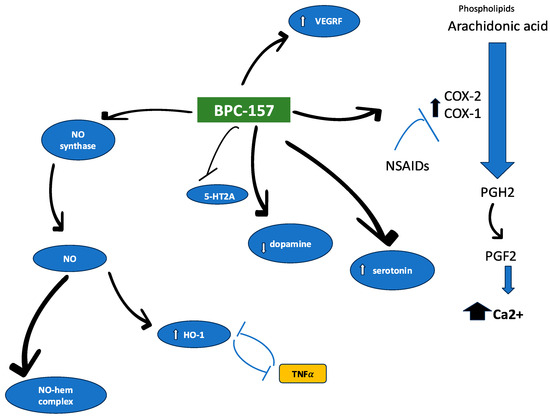
What the literature suggests about possible medical applications
When I evaluate “possible medical application” claims for peptides like BPC 157, I separate preclinical signals from clinical readiness. Preclinical findings can be meaningful—but only if the chain of evidence is coherent: relevant models, plausible mechanisms, and pharmacology that supports translation.
1) Tissue repair and wound-related endpoints
Many discussions of BPC 157 focus on endpoints associated with tissue repair, sometimes across different model systems. The underlying logic often looks like this:
- Observed improvements in repair-related measures
- Proposed mechanistic links (e.g., signaling pathways, angiogenesis, inflammation modulation—depending on the specific paper)
- Patent language that translates those observations into therapeutic use intents
What I learned reviewing this class: effects can be robust in narrow models yet still fail to map cleanly to complex human disease processes. That mismatch is not a reason to dismiss the research, but it is a reason to avoid overgeneralizing.
2) Gastrointestinal and mucosal protection themes
Another recurring application area in peptide literature is gastrointestinal and mucosal function. Here, the logic usually centers on protective or restorative effects in injury models. In practice, I look for how the studies handle confounders such as:
- Baseline injury variability
- Timing of administration relative to injury
- Outcome definitions (histology, biomarkers, functional measures)
If those elements are consistent and mechanistically connected, it strengthens plausibility—though it still does not equal clinical efficacy proof.
3) Why mechanism claims should be treated carefully
Mechanistic language in peptide papers can be persuasive, but sometimes it reflects pathway associations rather than definitive causality. In my hands-on synthesis work, I prefer mechanistic sections that do at least some of the following:
- Use appropriate controls
- Include dose-response logic
- Show that blocking a pathway reduces the effect
- Demonstrate reproducibility in more than one model
Where these elements are missing, the mechanism should be read as a hypothesis rather than settled truth.
Patent review perspective: what filings can (and can’t) tell you
Patents can provide a “map” of what applicants believe is protectable—often emphasizing therapeutic indications, dosing concepts, formulations, and method-of-use claims. However, patents are not clinical evidence. They show intent and novelty at the time of filing, not proof of safety and efficacy in humans.
How to interpret BPC 157-related patent patterns
In a typical literature + patent review, I look for three things:
- Alignment: do patents describe endpoints and mechanisms that match published preclinical work?
- Specificity: are the claims broad (“for tissue repair”) or narrow (“for defined injury mechanisms with described dosing regimens”)? Specific claims are easier to evaluate critically.
- Consistency: do later documents refine earlier claims with clearer composition and use-case definitions?
When alignment and specificity are high, it increases internal coherence of the overall evidence narrative. When they’re low, the gap between “promising preclinical findings” and “solid therapeutic substantiation” can widen.
Safety, quality, and real-world limitations (the part many summaries skip)
Even when a peptide has encouraging preclinical signals, real-world use introduces extra variables: manufacturing quality, purity, stability, and dosing control. I’ve seen reviews where the science is discussed abstractly, while the practical implementation details (e.g., batch consistency and verification methods) are left vague.
From a trust-and-reproducibility standpoint, the key limitations to keep in mind are:
- Evidence level: much of the discussion remains preclinical or mechanistic, not clinical.
- Translational uncertainty: animal models don’t automatically predict human outcomes.
- Composition verification: peptide products must match the described sequence and quality attributes.
- Claim inflation risk: marketing can outpace the strength of evidence.
My recommendation is to treat “possible medical application” as exactly that—possible—until human data and rigorous clinical evidence reduce uncertainty.
Practical takeaway checklist for readers asking “bpc 157 where does it come from”
If you’re trying to evaluate BPC 157 responsibly, here’s the checklist I’d use during a quick evidence scan:
- Origin described clearly? Look for consistent source framing and naming/derivation context.
- Composition is specified? Prefer sequence-level or otherwise verifiable identity information across sources.
- Mechanism claims are testable? Strong papers connect claims to experiments rather than speculation.
- Patents match the literature? Use the filings to understand intended use-cases, not to assume proven efficacy.
- Endpoints are meaningful? Verify whether outcomes are functional, not only surrogate markers.
FAQ
What does “bpc 157 where does it come from” usually refer to?
It typically refers to the peptide’s described biological context and naming/derivation history in published literature and patent documents, plus whether those descriptions consistently match the peptide identity used in studies.
Does the patent literature prove BPC 157 works medically?
No. Patents generally reflect protectable therapeutic concepts and intended use. They are not substitutes for controlled clinical trials demonstrating safety and efficacy in humans.
Are the proposed applications supported by clinical evidence?
Most widely circulated BPC 157 discussions emphasize preclinical and mechanistic findings. Clinical-level support requires robust human studies, which should be assessed separately from early research signals.
Conclusion
BPC 157’s story is best understood by separating origin and identity (what it is described as coming from and how consistently it’s defined) from application claims (what literature and patents suggest it could do). In my review experience, the strongest way to build trust is to look for internal consistency across composition details, mechanistic logic, and aligned patent/literature use-cases—while remaining clear-eyed about the gap between preclinical promise and clinical proof.
Next step: do a fast consistency check: collect the peptide identity/composition details from the main papers you’re using, compare them to the claims described in related patents, and only then decide which “possible medical applications” are plausible enough to justify deeper reading.
Discussion